
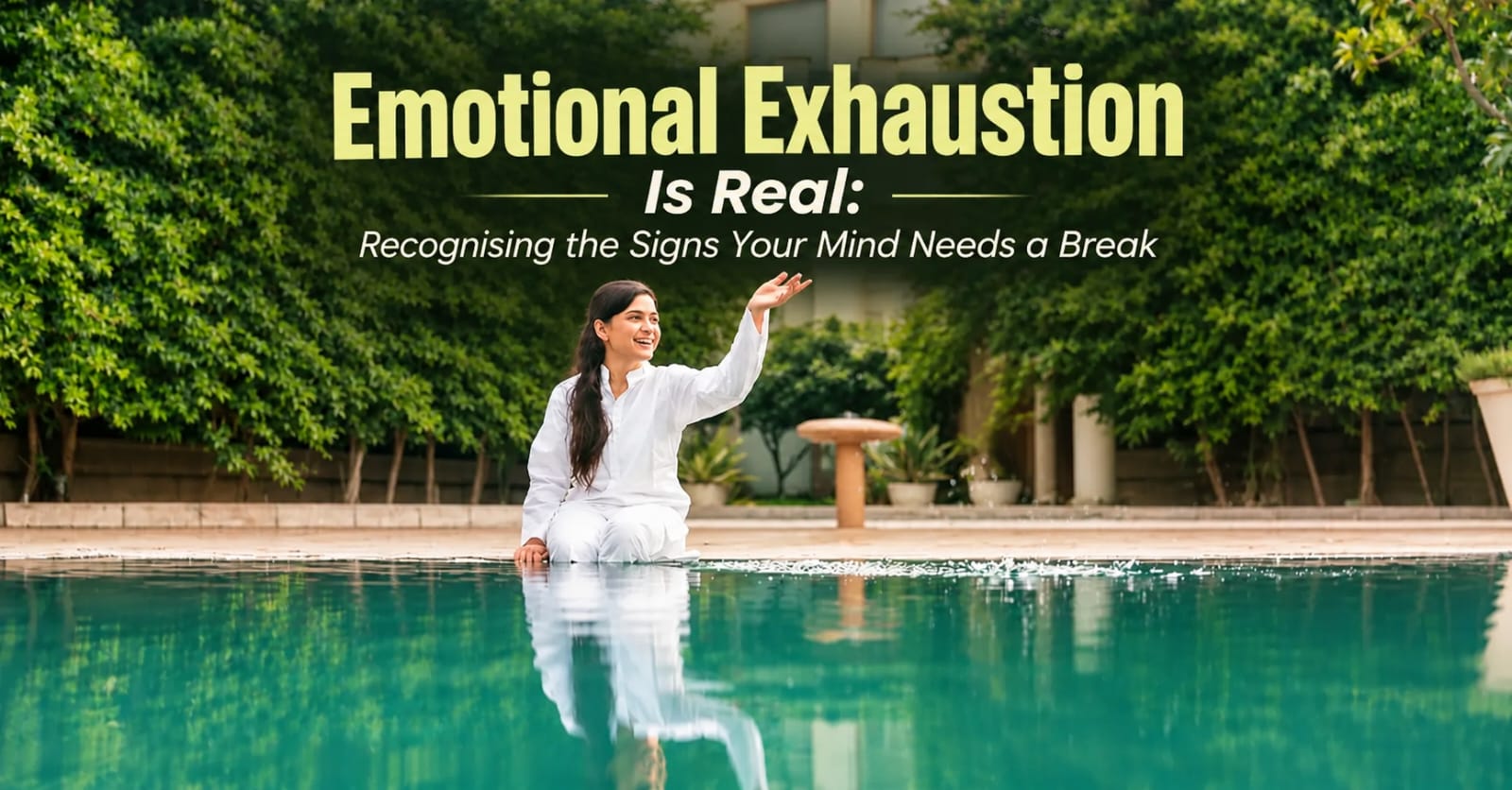
When Sleep No Longer Feels Like Rest
There is a distinct kind of tiredness that a Sunday afternoon nap cannot fix. Your body may
have had eight hours in bed, your calendar may look manageable on paper, yet even
answering a simple text message feels like lifting a heavy weight. Unlike physical
fatigue—which announces itself through sore muscles and heavy eyelids—emotional
exhaustion accumulates silently behind a composed smile and a functional daily routine.
It is the quiet depletion that happens when you spend months absorbing stress, managing
unspoken expectations, and staying emotionally available for everyone except yourself.
Recognising this state early is not an indulgence; it is essential preventive care for your
nervous system.
The Quiet Signals Most People Overlook
Emotional depletion rarely arrives as a sudden collapse. Instead, it reveals itself through
subtle shifts in how you relate to your work, your loved ones, and your own inner world:
You aren’t losing your passion or your patience; your emotional bandwidth has
simply been overdrawn without a deposit.
● Compassion Numbness: Feeling strangely detached when friends share good
news or problems, not because you no longer care, but because your emotional
reserves are empty.
● Micro-Decision Paralysis: Feeling disproportionately overwhelmed by tiny
choices—like deciding what to eat for dinner or which email to answer first.
● Low-Grade Cynicism & Irritability: Snapping at minor inconveniences or viewing
everyday interactions through a lens of quiet frustration.
● Physical Somatization: Carrying unprocessed emotional weight as tight shoulders,
shallow upper-chest breathing, recurring tension headaches, or unexplained
digestive sensitivity.
● The “Sunday Dread” That Never Leaves: Waking up already bracing for the day
ahead before anything demanding has even happened.
What Happens Inside an Emotionally Depleted Brain
When emotional demands outpace recovery for weeks or months, the brain shifts from
creative, thoughtful processing into pure resource conservation:
● Prefrontal Cortex Fatigue: Executive regulation and impulse control tire first,
showing up in daily life as difficulty concentrating, forgetfulness, and a shorter
temper.
● Amygdala Hyper-Sensitization: The brain’s threat-detection centers stay on high
alert, causing you to overreact to minor feedback or feel constantly on edge.
● HPA Axis & Cortisol Flattening: Prolonged stress signaling disrupts natural daily
energy curves, leaving you feeling “wired but tired” at night and flat in the morning.
● Gut-Brain Signaling Slowdown: Vagal tone drops under chronic emotional load,
slowing digestive motility and triggering bloating, appetite swings, and persistent
mental fog.
Ayurvedic Perspective: Sattva, Rajas, and Mental Immunity (Ojas)
In Ayurvedic psychology, mental clarity and emotional resilience depend on the equilibrium
of three subtle qualities of the mind (Maha Gunas): Sattva (clarity and harmony), Rajas
(activity and restlessness), and Tamas (heaviness and withdrawal).
Prolonged emotional overexertion pushes Rajas into overdrive until the mind burns through
its reserves and collapses into Tamas, producing apathy, heaviness, and detachment.
Simultaneously, chronic emotional strain depletes Ojas, the subtle biological essence
responsible for cellular immunity, groundedness, and emotional warmth. Restoring balance
requires soothing aggravated Vata in the mind (Prana Vata) while rebuilding Sattva and Ojas
through stillness, nourishment, and sensory gentleness.
Research Shows That: Evidence Behind Emotional Recovery
● Emotional Labeling Lowers Limbic Reactivity: Neuroimaging studies demonstrate
that simply naming an emotion accurately (“I feel depleted” rather than “I am fine”)
reduces amygdala activation and engages calmer prefrontal regulation.
● Therapeutic Touch & Oil Therapies (Abhyanga / Shirodhara): Warm herbal oil
therapies stimulate cutaneous mechanoreceptors and lower sympathetic arousal,
helping release stored somatic tension held in the nervous system.
● Nature Immersion Restores Directed Attention: Spending uninterrupted time in
green, quiet environments replenishes depleted attentional networks far more
effectively than passive indoor screen entertainment.
● Protected Solitude Rebuilds Empathy: Stepping away from social and digital
performance allows mirror neurons and emotional regulation circuits to reset,
restoring genuine warmth and patience.
Four Gentle Ways to Give Your Mind Permission to Pause
Recovering from emotional exhaustion does not require overhauling your entire life
overnight. It begins with small, non-negotiable boundaries that signal safety to your nervous
system:
1. Drop the “Always Available” Expectation: Designate an evening window where
messages, calls, and problem-solving wait until the next morning—without guilt or
lengthy explanations.
2. Release Unspoken Somatic Tension: Practice ten minutes of Yoga Nidra (guided
yogic sleep) or slow, extended-exhale breathing (4-7-8 or Bhramari) to shift your
body out of silent bracing mode.
3. Nourish With Warmth and Simplicity: Favor warm, grounding meals—spiced
soups, stewed fruits, herbal infusions with Brahmi or Ashwagandha—that comfort the
gut-brain axis rather than relying on caffeine or sugar for artificial momentum.
4. Seek Environments That Ask Nothing of You: Spend time in spaces designed for
quiet restoration rather than stimulation, allowing your mind to simply exist without
performing or producing.
A Sanctuary for Deep Mental Renewal at Naad Wellness
Sometimes, true emotional recovery begins the moment you step into an environment where
every detail is taken care of—so you no longer have to carry the weight of constant
decisions.
At Naad Wellness, surrounded by serene greenery and unhurried stillness, restorative
experiences are crafted to soothe an overworked mind and replenish depleted vitality. Under
the leadership and vision of Naad Wellness founder Ramesh Kumar, our sanctuary brings
together time-honored Ayurvedic mind-body therapies, yogic sciences, and evidence-backed
clinical care. Whether through deeply calming treatments like Shirodhara, personalized
consultations, or quiet moments of reflection, Naad Wellness offers a supportive haven
where your mind can finally exhale, reset, and return to its natural state of clarity and calm.